No products in the cart.
Hope on Wheels · Phase I Complete
 admin
adminTwelve Camps, Nearly 300 Children
Over seven months at Kamalapur Railway Station and Sadarghat Launch Terminal, mobile healthcare reached 294 street-connected children who had nowhere else to turn.
A joint initiative with Human Concern USA
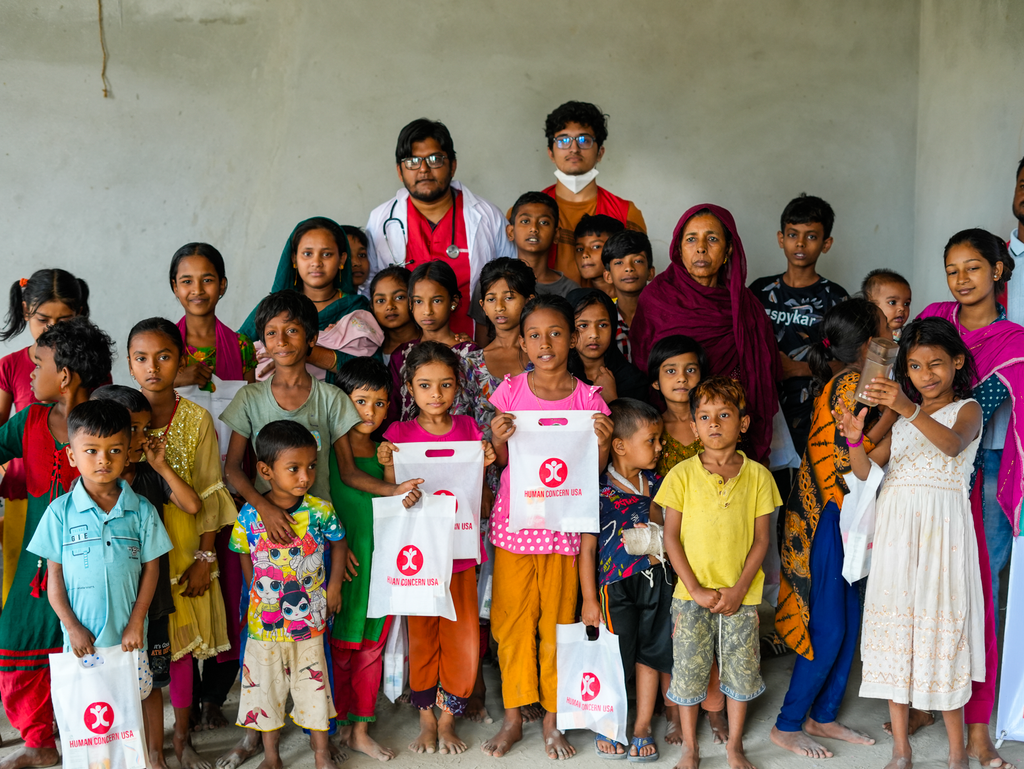
Children and families gather after a Hope on Wheels health camp, Dhaka — each child going home with a Human Concern USA care package.
For a street-connected child in Dhaka, a visit to a doctor is rarely simple. There’s no appointment to book, no fixed address for a follow-up, no guarantee of being let in the door, let alone treated with patience. Hope on Wheels, our mobile health initiative delivered in partnership with Human Concern USA, was built on a simple reversal of that reality: instead of asking children to find healthcare, we brought healthcare to where they already are.
Over the past seven months, our mobile clinics set up regularly at two of the city’s busiest transit points — Kamalapur Railway Station and Sadarghat Launch Terminal — becoming a familiar, trusted presence rather than a one-time visit.
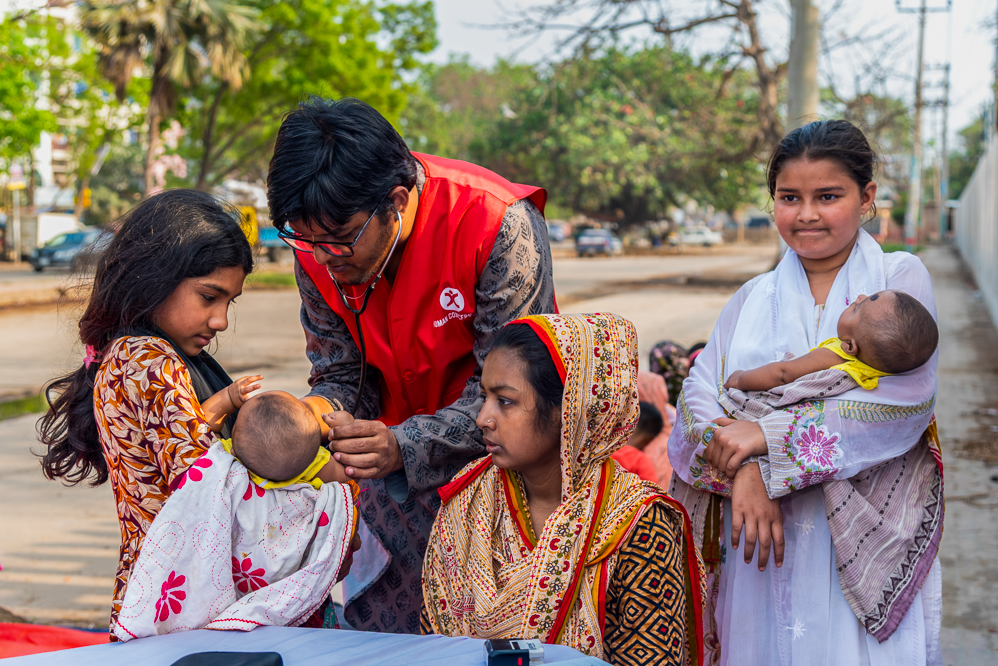
Global Street Connect volunteer doctor examines an infant brought in by family members near Sadarghat.
By the numbers
- 12 mobile health camps completed
- 294 street-connected children reached
- 7 months of continuous outreach
- 57 children received preventive deworming treatment
The most common conditions we treated reflect what life on the street actually does to a child’s body — the physical cost of sleeping rough, drinking unsafe water, and going without basic hygiene for months at a time.
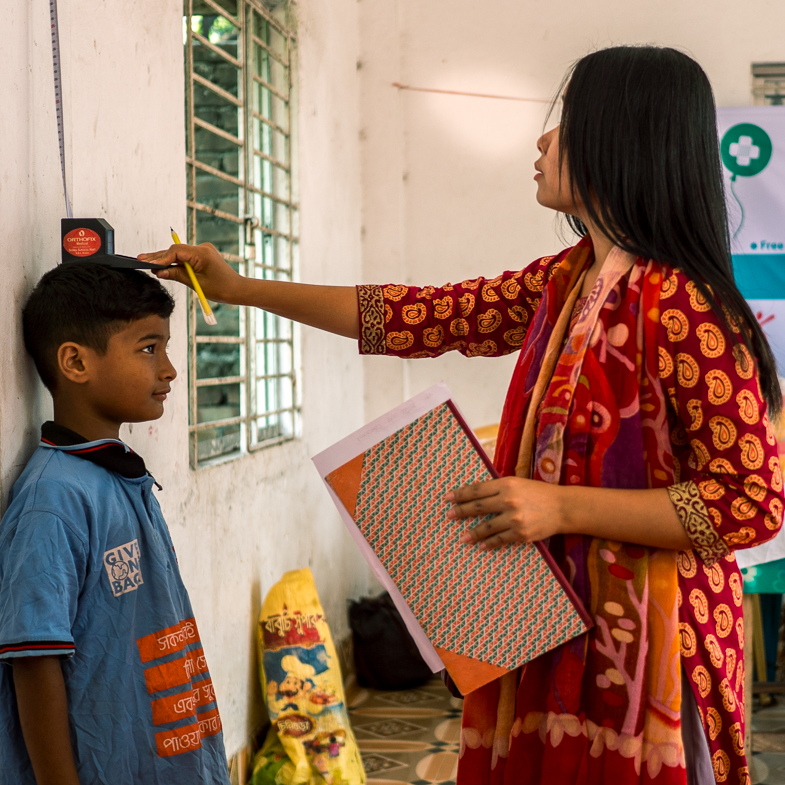
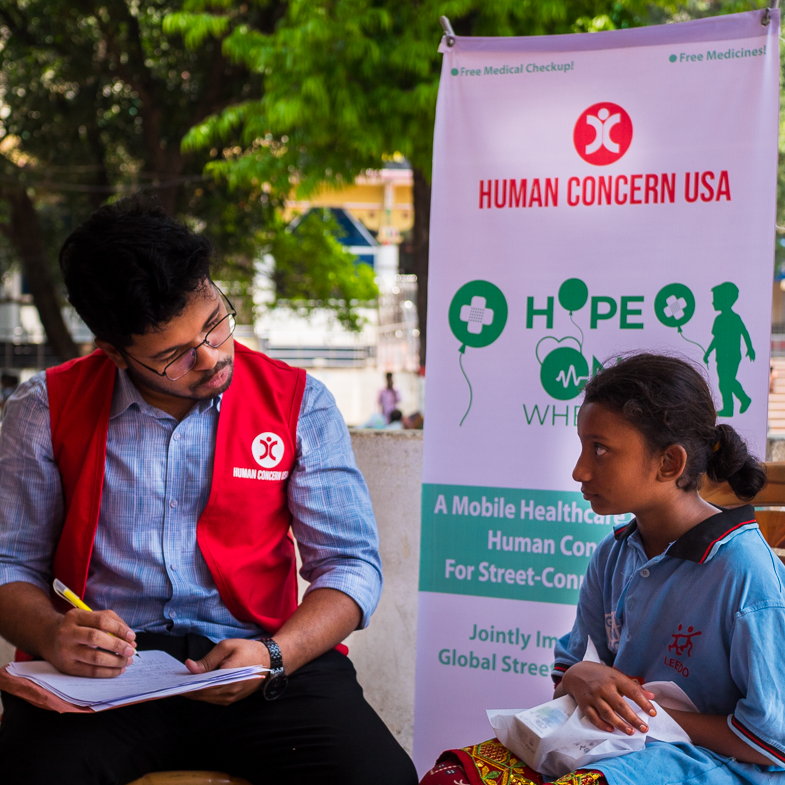
Every child was screened individually by the Human Concern USA and Global Street Connect field team — height, weight, and a conversation, not just a number.
Most common conditions treated:
- Skin irritation: 79%
- Fever: 51%
- Skin infections: 35%
- Cough, cold, or abdominal pain: 10–25%
What the children told us
We didn’t just track diagnoses. We asked the children how the experience felt. Nearly every child said they were treated with kindness, fairness, and respect. Almost all received medicine on the spot rather than being sent elsewhere, and said they’d come back the next time a camp was held nearby.
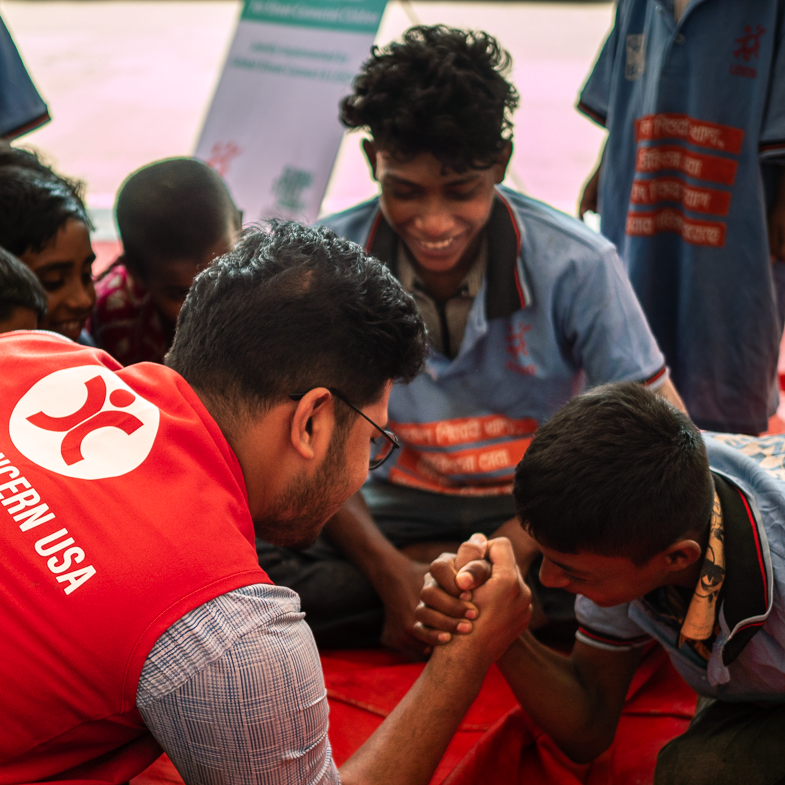
Trust isn’t only built in the exam chair — sometimes it’s an arm-wrestle with our volunteer.
That return — the willingness to come back — may be the single most important number here. Trust, for children who have learned to expect very little from adults and institutions, isn’t given easily. It’s built one camp at a time.
What’s next
Phase I was a proof of concept: that consistent, judgment-free, location-based healthcare can genuinely reach children that the formal system misses. Phase II raises the ambition — a 12-month roadmap to deliver 24 mobile health camps and reach at least 600 street-connected children across Dhaka.
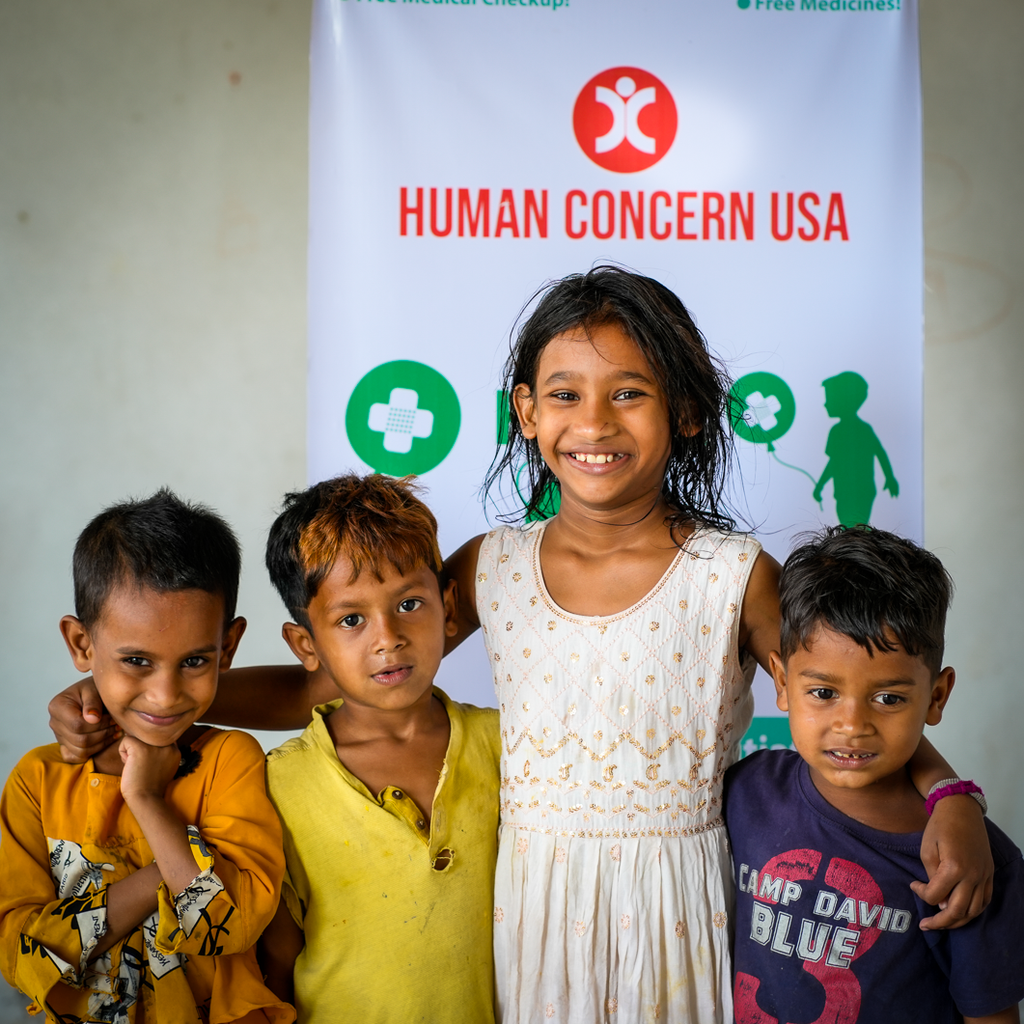
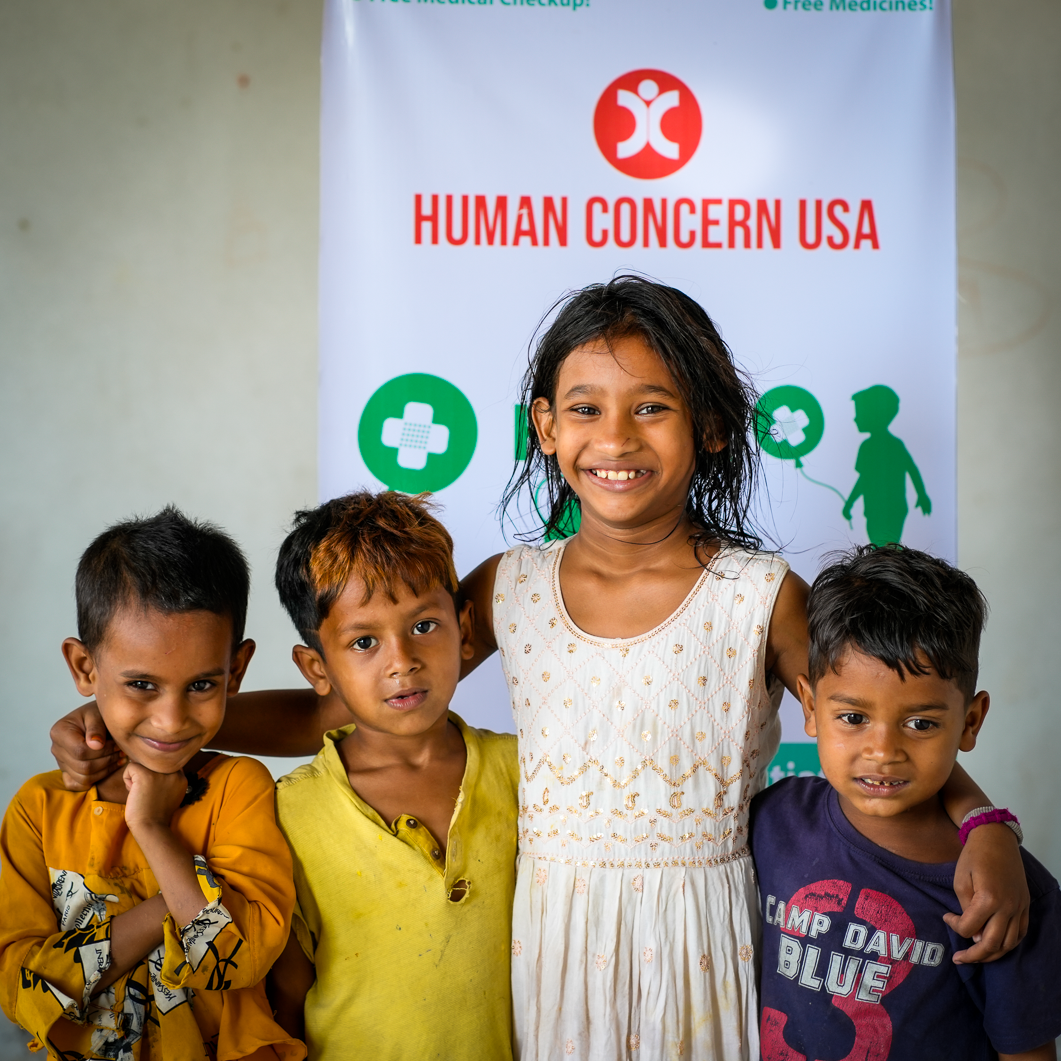
Four friends, one afternoon, a lot to smile about.
None of this happens without partnership. Our thanks to Human Concern USA for standing behind this work from the start, and for the volunteers, funding, and medical supplies that kept all twelve camps running.